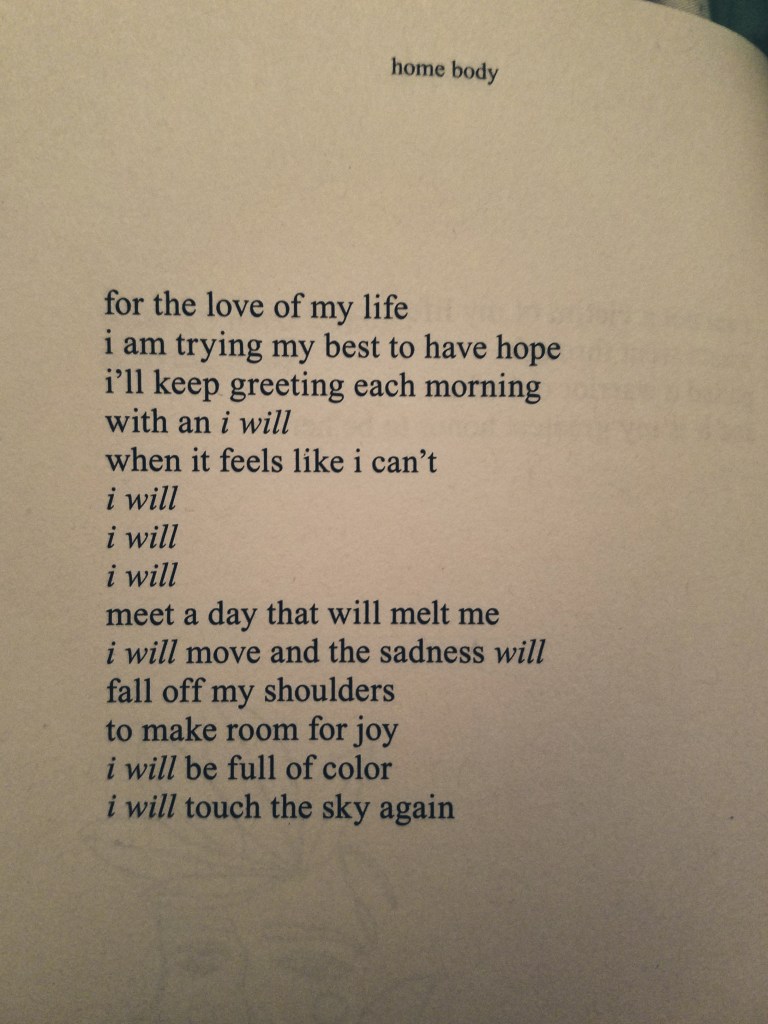
—Rupi Kaur, Home Body
—Rupi Kaur, Home Body

No one who is good can ever be ugly.
—Roald Dahl, The Twits

Books serve as the basis for so many films and TV shows that it’s easy to forget that book source material is frequently found within the medium that should suit it least: musical theatre.
Musicals are big, loud, in-your-face (and ears) live performance. You get dressed up, leave the house, and likely socialize a bit when you go see a musical. Reading, on the other hand, is a quiet, usually solo, more internal activity you can do anytime, anywhere, from a bridge to a cafe to your own couch.
But the reason these two very different mediums can work quite well together is simple: Music and stories both speak to the soul. Combine them and, with the right artists and creators doing the adapting, you often get something quite beautiful.
Here are some of my favorite musicals based on books (though this is nowhere near an exhaustive list—I might have to do a part two):
She’s dramatic. She’s heart-wrenching. She’s almost three hours long. She’s the musical phenomenon that swept the world. You know her, you love her. She’s Les Misérables: the Musical! Who would’ve thought that the very long, very dramatic, and often very bleak novel by Victor Hugo—alternately titled in English The Miserable Ones, The Wretched, The Poor Ones, and, taking the cake, The Wretched Poor—would make for a smash a hit musical?
Well, composer Claude-Michel Schönberg and lyricist Alain Boublil did, and they got it right. We like stories about hope, even (especially) in dire situations, and about the human spirit overcoming even the worst of odds. And when you set a story like that to sweeping violins, imposing drums, and powerful voices, you’ve got something worth more than the sum of its parts. Sure, the bulk of the characters in Les Mis only wind up overcoming their struggles in death, but their deaths are made significant by the music and words that frame them, giving pedestrian casualties of war and poverty poetic meaning—the ordinary made extraordinary (emphasis on the “extra.” Have you heard “One Day More”??)
The musical retains the bones of the story from the novel and smartly keeps it character-focused. The book is padded with tangents on philosophy and French history, which can be a lot to sift through when you just want to find out what the characters do next. That said, even translated from French into English, Hugo’s writing is beautiful. The sentiments captured are universal and lovely—and this is part of why the musical is so good, because it retains this beauty and does it well.
The mouthful of a musical Natasha, Pierre & the Great Comet of 1812 is an underrated gem. It’s unique, exciting, unpredictable, existential, and based on a short section (volume 2, section 5) of Leo Tolstoy’s epic novel War and Peace. And, like the other musical based on an epic novel just mentioned, it’s entirely sung and on the longer side. Which, really, is the best kind of musical, no? (Just me?) The music itself feels so new it borders on the avant-garde, while at the same time having the welcoming quality of being, to quote the lyrics, “scruffy and cozy like an old dressing gown.”
A soap opera-y little slice of War and Peace as a whole, Great Comet‘s story revolves around young, naive Natasha, who’s betrothed to one man but seduced by another. There are some hot guys, a promiscuous sister, a crazy old man, a distraught BFF, a wild troika driver—oh, and Pierre, who mostly just whines about how he’s not doing anything with his life (relatable)—all set against the backdrop of Napoleon’s 1812 invasion of Russia. And there’s a comet, too.
One of the coolest things about Great Comet (and there are many) has to do with its use of Tolstoy’s text. A decent amount of the lyrics are taken verbatim from the (translated) text of War and Peace, interwoven with original lyrics by the composer Dave Malloy, and the characters regularly narrate/sing their own actions. Like, “I blush happily,” and, “I burst into sobs,” and, “A smile lurks at the corner of my mouth.”
This, combined with onstage and cabaret-style seating for audience members, breaks the fourth wall in a novel (pun intended) way: Whereas most musicals and plays are about watching a story unfold in front of you at arm’s length, Great Comet takes you by the hand, puts a glass of vodka in it, and says, Come, gather ’round, sit inside this story with us as we tell it to you. Ironically, something about drawing your attention to the fact that a story is being told gives the musical an intimacy that feels almost like a fireside tale—like a story being read to you.
Gregory Maguire, author of Wicked: The Life and Times of the Wicked Witch of the West and Confessions of an Ugly Stepsister, among others, doesn’t get enough credit for jump-starting the “What if the fairy tale was told from the villain’s perspective?” trend. Probably because it was the musical adaptation of one of these novels that popularized this trend more than the novel itself.
Wicked the musical and Wicked the book are very different. One is dark, political, sometimes sexual, and pretty grim. The other is…well, compared to all that, a little cheesy. But it’s fine, because it works. Stephen Schwartz (composer of Godspell, Pippin, and lyricist of Pocahontas‘ iconic “Colors of the Wind”) made a musical that’s far more optimistic, cute, and PG-rated than its source material, but it makes sense that it’s a lighter fare.
Since the source material itself comes from source material—L. Frank Baum’s The Wonderful Wizard of Oz—and because that source material was made into a 1939 film so well-loved that’s it’s still ubiquitous in pop culture today, I think Wicked the musical is required to reference that frequently, which has the affect of making it a little cheesy.
Like Les Mis, the bones of the story from the novel make up the musical’s plot (which, if you didn’t know, is The Wizard of Oz told from the point of view of Elphaba, the Wicked Witch of the West, and guess what, she’s actually kind of a cool normie who’s not so wicked after all). But unlike Les Mis, instead of just leaving some stuff out, anything else taken from the book is changed or heavily watered down. Again, not complaining, because Wicked is fun, has its emotional moments, and despite the trendiness of musical that was originally aimed at a younger generation, the music holds up almost 20 years later.
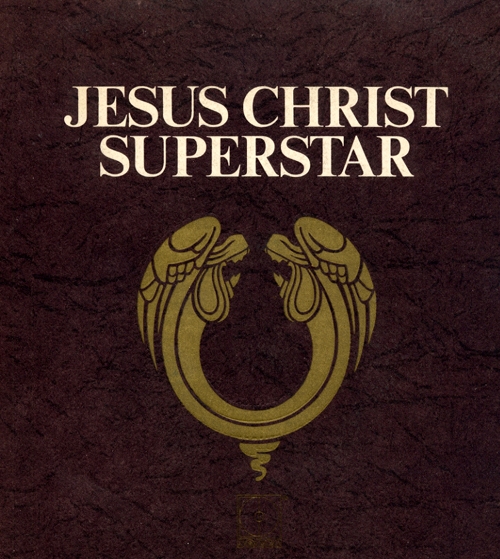
Based on the best-selling book of all time, Jesus Christ Superstar is deservedly the more revered of the two Bible-based musicals by composer Andrew Lloyd Webber (the other being Joseph and the Amazing Technicolor Dreamcoat, which is bright, circus-y, and aimed at kids). The rock opera started as a concept album in 1970 before making its way to Broadway a year later, and the album had been such a success that the show already had a fanbase when it opened.
JCS stays true to the events that take place in the New Testament’s four gospels of Matthew, Mark, Luke, and John—Jesus has disciples, including Mary Magdalene, he teaches, the Roman priests make a plot against him, Judas plans to betray him, the Last Supper, the Garden of Gethsemane, Jesus’s arrest, trial, and crucifixion—but the musical also humanizes the Biblical figures and colors in the motivations (Webber’s take, anyway) of Judas and Jesus that aren’t fully revealed in the gospels.
For one, the Bible makes Judas out to be a stock villain. Webber wanted to give more nuance to Judas, showing him as deeply conflicted over his predestined betrayal of Jesus. He’s a sympathetic character in the musical because he believes what he does is for Jesus’s own protection. The story is told more from Judas’s perspective than Jesus’s, and it’s more of a political tale than a religious one.
Another artistic liberty taken is in the romantic feelings Mary Magdalene expresses for Jesus in “I Don’t Know How to Love Him”, and the musical initially got a Da Vinci Code-like backlash from some of the Christian community who didn’t agree with the implication, or of Jesus being shown as more human than divine.
But Webber’s version of the story—one that’s about religious freedom versus political oppression, that’s about the clashing of opinions between a follower and a leader—is well-suited to a rock soundtrack. You don’t need to be Christian or religious at all to appreciate Judas soulfully singing tormented soliloquies or Jesus belting out his feelings in 70’s rock falsetto.
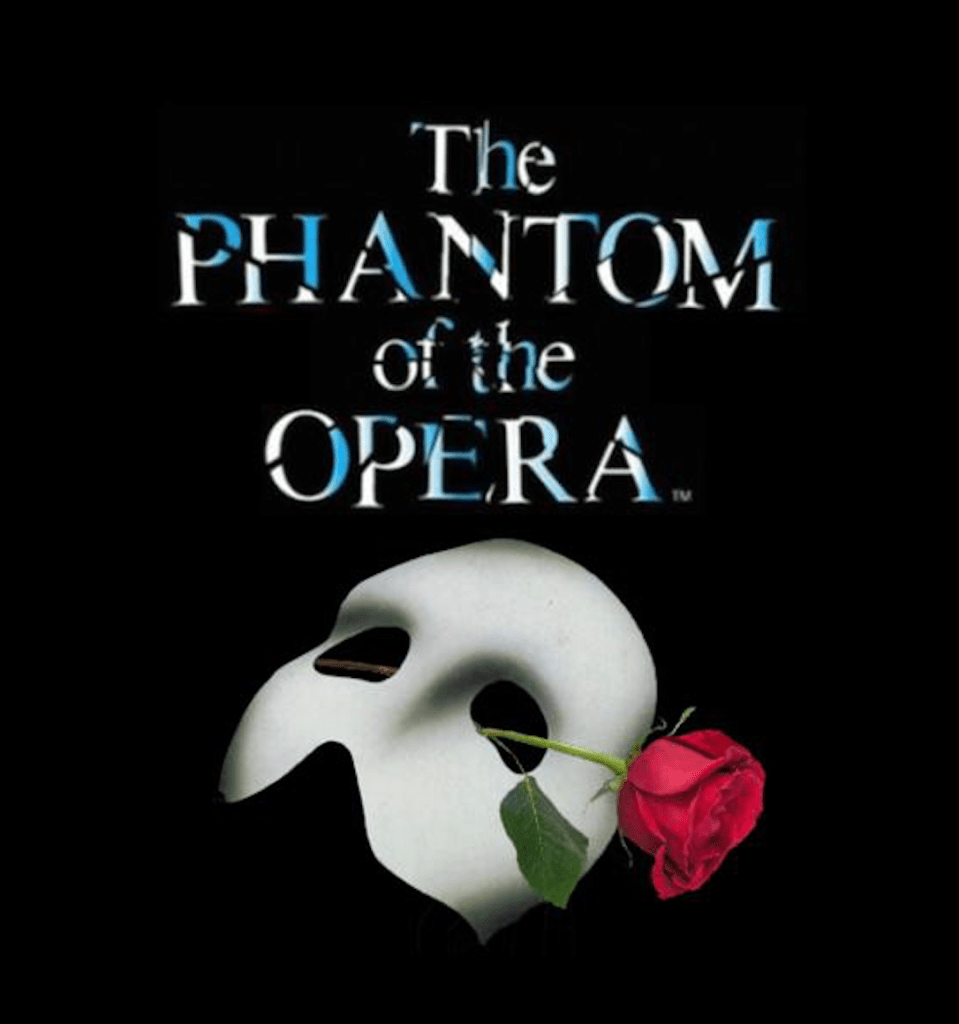
Gaston Leroux’s novel The Phantom of the Opera, or Le Fantôme de l’Opéra, has been adapted so many times in so many mediums that the adaptations alone have their own Wikipedia page. (To be fair, this is also true for Les Mis, but the Phantom page has a lengthy list of musical adaptations, whereas Les Mis only has the one.) But the most well-known without a doubt is Andrew Lloyd Webber’s 1986 musical that, in 2006, became the longest-running musical in Broadway history.
The Leroux novel was published in serialized portions between 1909 and 1910, so it reads a little choppy as a whole. And while the world and suspense created by Leroux are intriguing, the writing itself is average (IMO), which is why the fact that Webber’s Phantom was originally a book can fall by the wayside. Webber took what was a Gothic suspense story and made it a melodrama about a love triangle, passion, the tortured downside of being an artistic genius, and the mysterious inner workings of a grand Paris opera house. He blew it wayyy TF up and turned that shit up to 11. And if there’s any medium you can do that with, it’s musical theatre.
With the musical you have to suspend your disbelief, because if you apply too much of a realistic lens, it winds up being a story about a stalker and a traumatized chorus girl—which is basically what the novel is. Everything about the Phantom musical is over-the-top. That’s what makes it such an experience. This is one story that works better as an ostentatious, extravagant piece of theatre than as a quietly read novel.
*FYI the book of a musical is its own thing. Also called a libretto, the book of a musical is the dialogue and direction that connects the songs. In other words, the script.
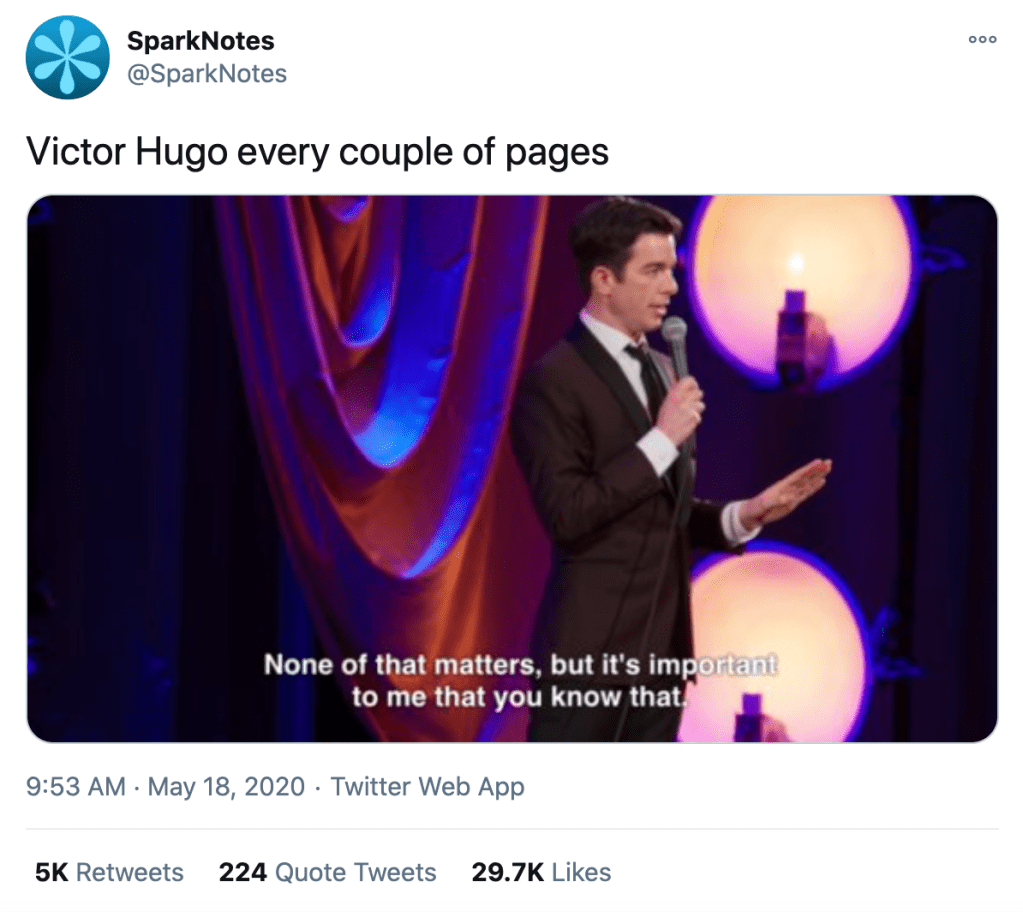
Plus footnotes!
Happiness is harder to put into words. It’s also harder to source, much more mysterious than anger or sorrow, which come to me promptly, whenever I summon them, and remain long after I’ve begged them to leave.
—David Sedaris, Calypso
A hundred years ago in 2012 when The Hunger Games franchise was at the height of its popularity, SNL came out with this ridiculous sketch that I just remembered existed the other day because I spotted Uncrustables at the grocery store and laughed under my mask at the thought of Sofía Vergara plugging the sandwich sponsor and yelling that she’s “HUNGRY FOR MORE HUNGER GAAAAAMES!!!”
Vergara gives 100% as an overly enthusiastic Capitol reporter getting the scoop from inside the arena as kids drop dead around her, which is probably a fairly accurate representation of how Capitol people would’ve acted watching the Hunger Games at home.
And how can you not love these two:



All of the animals in George Orwell’s allegorical novella Animal Farm come in groups: the pigs, the dogs, the cows, the horses, the chicken, the sheep—but there’s only one cat.
While she may not have a name or any spoken dialogue and only appears six times in the book, the cat manages to be one of the most curious and mysterious characters in Animal Farm.
She’s generally shown to be apathetic, elusive, and somewhat manipulative, but also kind of amusing. Most mentions of the cat read almost as punchlines, like, The dogs did X, the pigs did Y, the horses did Z, and meanwhile the cat did whatever TF she wanted. And, since Animal Farm is a pretty bleak book, the cat, bless her, adds a little bit of fun.

Her first appearance in the story shows her personality right out of the gate: All the animals are gathered in the barn for a meeting, and the cat is the last to arrive. She looks around for the warmest place to sit, finally settles, and purrs contentedly throughout Old Major the pig’s speech “without listening to a word of what he was saying.”
The 1954 animated film shows the cat in this scene, too, only she makes even more of a grand entrance as all the animals go silent and wait for her to strut across the barn and find a seat. She then immediately takes a nap. (The cat is not featured in the 1999 live action film adaptation, but we don’t talk about that one anyway because it’s—how do you say?—bad.)

Throughout the story, the cat is seen to be shirking off work, though conveniently returning in time for dinner, and once when the animals take a vote, she votes on both sides. She makes clever excuses and purrs her way out of things, and the other animals can’t help but be taken in.
For only a few days, she joins the Re-education Committee to teach other animals about human-less society, telling the sparrows that all animals are equal so they should come right over and perch on her paw. She actually does help defend the farm once by attacking a human with her claws, but notably only joins the fray after seeing that all the other animals are fighting.

Almost every character in Animal Farm represents a figure from the Russian Revolution and its aftermath, so who is the cat supposed to be?
I’ve read a lot of different interpretations of what the cat represents: the Russian elite (who lived luxuriously and didn’t care about the plight of the working man); the educated (who didn’t believe communism was the right path but were also wealthy and did not work); the thieves and criminals of society (who freeload without contributing anything themselves); and opportunists (who are only interested in what will serve them most)—the one I tend to agree with.
Cats are self-sufficient, independent creatures. The Animal Farm cat doesn’t want to be tied down to any kind of society, but she’ll also take what she can get from it, if it doesn’t cost her. She’s intelligent, but self-serving. Her attitude and work ethic I think can best be summed up by something lawyer Jeff Winger says in the TV show Community: “The funny thing about being smart is that you can get through most of life without ever having to do any work.”
And the behavior of the cat was somewhat peculiar. It was soon noticed that when there was work to be done the cat could never be found. She would vanish for hours on end, and then reappear at mealtimes, or in the evening after work was over, as though nothing had happened. But she always made such excellent excuses, and purred so affectionately, that it was impossible not to believe in her good intentions.
—George Orwell, Animal Farm
 That Book Broad