
I was okay just a moment ago. I will learn how to be okay again.
—Nina LaCour, We Are Okay
“I think I’m in a tragedy.”
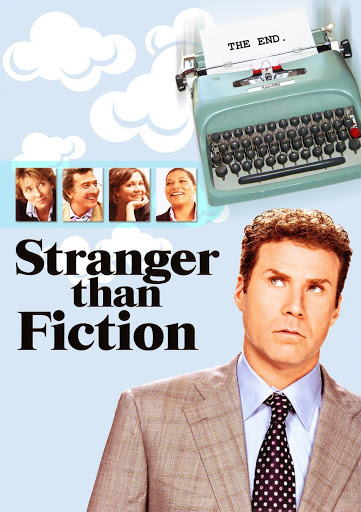
Have you seen 2006’s Stranger Than Fiction lately? It’s really cute.
So here I am, giving it a shout-out.
(It’s on Netflix, if you’re interested.)
IRS agent Harold Crick starts hearing a voice in his head narrating his life and thinks he might be a character in someone’s book. He seeks the help of a literature professor who tells him he needs to figure out whether he’s in a comedy or tragedy.
Harold, who lives a very routine, boring, and lonely life, starts branching out of his comfort zone to put this question to the test and see what might happen, good or bad. He learns guitar, pursues an unlikely love interest, and slowly loosens his rigid way of life in favor of some chance and fun.
Once he hears the voice narrate about how he will die soon, along with learning that the author narrating his life has a penchant for killing off her protagonists, he’s saddened by his impending death, mourning the life he could have had now that he’s learned to truly live.
I won’t say how it ends.
The cast is great—Will Ferrell should do more subdued roles like this. His Harold is super sweet and you can’t help but like him a lot. He and love interest Maggie Gyllenhaal have a lovely chemistry; I actually said aww out loud a couple times. Add Dustin Hoffman, Queen Latifah, and Emma Thompson as the glum, chain-smoking, death-obsessed author, and it’s a solid ensemble.
And it’s got lit. jokes.
When Harold tells the literature professor that the author narrated the line, “Little did he know that this simple, seemingly innocuous act would result in his imminent death,” about him, the professor is intrigued. The phrase “little did he know” tips him off that this is a third-person omniscient narrator—meaning one that knows more than the characters—and Harold might be telling the truth about the voice he hears. Because if the protagonist were just narrating what he knows of his own life, if Harold were making the voice up, he wouldn’t use an omniscient phrase like this.
“I’ve taught classes on little did he know,” Hoffman’s professor says, smiling knowingly. This seems like a jokey stab at how absurdly granular lit. theory can get, and I know from countless college lit. analysis classes that it’s hilariously accurate.
Another funny stab at the lit. world: the author has an assistant whose sole job is to GET THE WRITER TO WRITE THE DAMN BOOK. It’s a trope based in (some) truth that (some) authors drag their feet finishing a project after having accepted the advance; they feel trapped and locked in by the deadline, lose their creative mojo, and come down with the dreaded writer’s block.
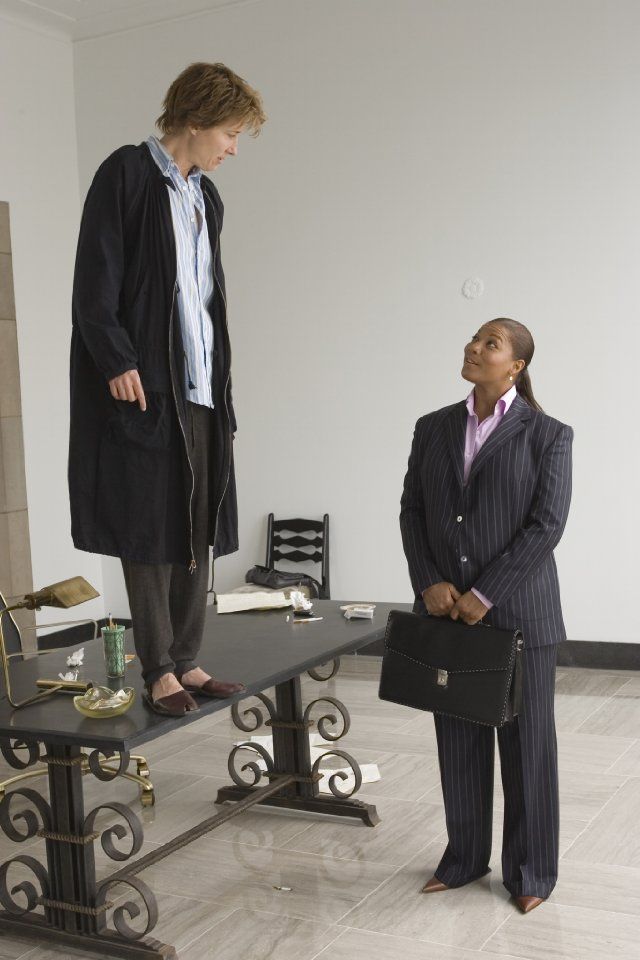
Seeing Queen Latifah calmly but sternly hound Emma Thompson into actually writing something instead of brooding and pondering death made me LOL, and it made me want a similar assistant of my own to keep me on task.
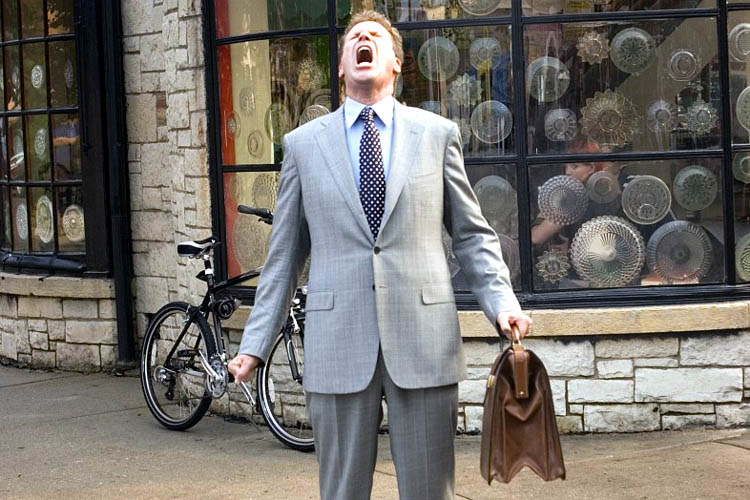
While it might not dive super deep, and while you do have to suspend your disbelief a bit, Stranger Than Fiction is a charming film about our relationship with fictional characters.
Fiction is based in reality. Characters are often based on or inspired by real people. We want our fiction to have an element of realness, and sometimes we want our lives to have a spark of fiction. This movie blurs those lines, trying to answer the question from each side: “What if characters in books existed in real life?” and “What if I was a character in a story?”
It’s a love letter to writing, storytelling, and how fictional characters can seem so very real to us.
Harold Crick: You have to understand that this isn’t a philosophy or a literary theory or a story to me. It’s my life.
Professor Hilbert: Absolutely. So just go make it the one you’ve always wanted.
—Stranger Than Fiction

What am I? A bit of dust embodied by an organism. What am I supposed to be doing on this earth? I have a choice. To suffer or to enjoy myself. Where will suffering get me? Nowhere. But I will have suffered. Where will enjoying myself get me? Nowhere. But I will have enjoyed myself.
—Victor Hugo, Les Misérables
Review: Red Queen by Victoria Aveyard
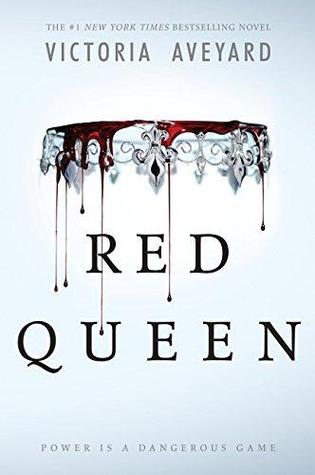
The genre: Fantasy, dystopian, YA
The gist: A teen girl copes with her unexpected role in a world where people are divided into classes by the color of their blood, red or silver.
The background: I saw this pop up on Goodreads about a year ago and was taken in by the bold, minimal cover, high rating, and dystopian/fantasy setting. I love detailed worldbuilding, and the premise of this one—where people have either red or silver blood and the Silvers have supernatural powers—sounded cool. I was ready to jump into this four-book series.
The tea: This book read like an extremely watered-down Hunger Games. It’s Diet Hunger Games. Or, as one Goodreads reviewer put it, the Walmart version of Hunger Games. I know tropes and formulas in genre fiction exist for a reason—because they’re tried and true and they work—but I couldn’t help but roll my eyes every time I came across yet another structural element or plot point of HG in Red Queen, without Aveyard having done the work of infusing the heart and soul.
Like HG, Red Queen is set in a dystopian-like (albeit fantasy, which HG is not) world with a tyrannical government, and each opens with a fear-mongering, government-held event meant to scare the masses into submission (the Reaping in HG, First Friday in Red Queen). Also like HG, Red Queen is narrated by a sixteen-year-old heroine with a special skill that makes her resourceful and scrappy (Katniss’s in HG is archery/hunting, Mare’s in RQ is pickpocketing), who has a gentler, younger sister she worries about, lives an impoverished life in an impoverished region, becomes an unwilling mascot for the revolution, and gets a catchy nickname (Katniss is the girl on fire, Mare is the little lightning girl). Not to mention the love triangle in which the heroine struggles to choose between a sweet boy and more headstrong boy.
I think I’m accidentally making this book sound better than it is.
Because the fact is, the best elements of The Hunger Games—a fleshed-out world, a strong, flawed heroine who has solid motives you can empathize with—weren’t there. Maybe I’m being unfair; HG is exceptionally good. But even without comparing the two, Red Queen falls flat. It’s light and inconsequential. I didn’t feel anything when reading it. I couldn’t buy into it.
That said, I do give Aveyard some credit for the somewhat unique world she created with the Silver superpowers and blood color determining one’s station in life. But it’s almost like she didn’t know her own creation enough to dig deeper and, disappointingly, barely scratched the surface.
The wrap-up: Don’t waste your time. The YA, fantasy, and dystopian genres have so many better books to offer.
The rating: ⭐.5 / 5
 That Book Broad