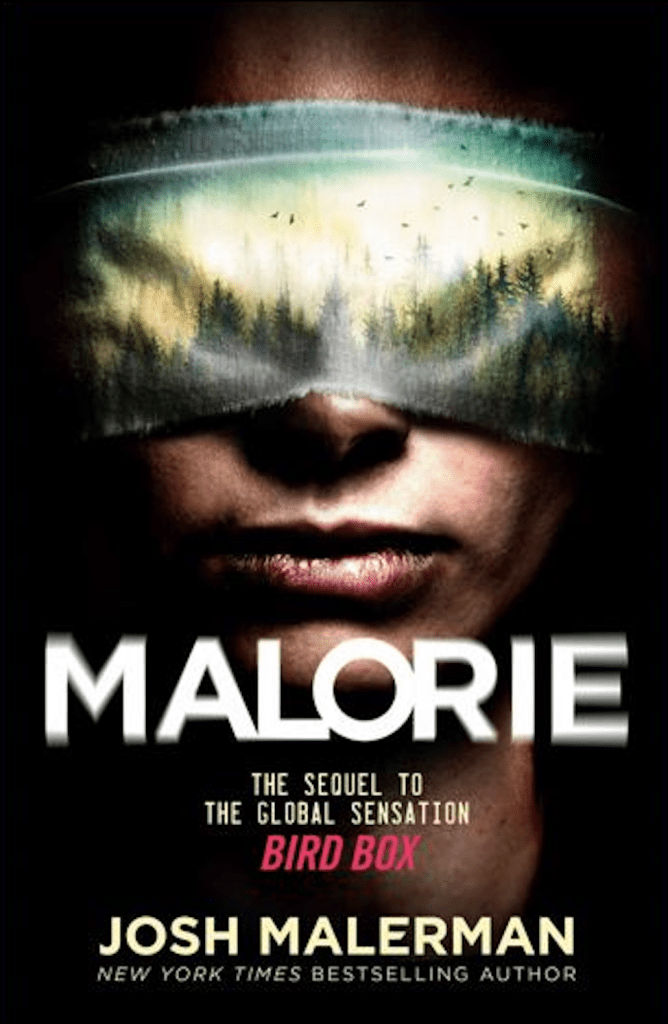
Review: Malorie by Josh Malerman

Review: Malorie by Josh Malerman

©Del Rey

The genre: Horror

The gist: Sequel to Bird Box. A woman and her two children survive in a world with mysterious creatures that make people go insane upon sight.

The background: Like a lot of people with Netflix access, I watched the movie Bird Box when it came out in December 2018. After reading some articles on it and discovering it was based on a book, I added my name to the very long waitlist at the library—turns out I was not the only one who had this idea—and months later, I finally got to read it. It was suspenseful, creepy, and just as fast-paced as the film.

Speaking of the film, Malerman said in the Acknowledgements of Malorie that he never planned to write a sequel, but people in his life saw the movie and started asking him, “What happens next?” And he decided he wanted to find out too.

The tea: I really liked this book. Like its predecessor, it was well-paced, kept me interested, and had some chillingly creepy moments. Malerman writes with an elegant focus that lets you truly step into those creepy moments, not to mention the head, mind, and fears of protagonist Malorie and her two kids.

We get a liiiiiiitle more insight into the creatures themselves, though not much. And I think it’s better that way. They’re scarier mysterious.

Getting two new POVs thrown into the mix with Malorie’s kids, Tom and Olympia, was a refreshing take on the Bird Box world, especially from characters who were literally born and raised in it. They don’t fear the creatures the same way Malorie and other adults who knew the “old world” do, and it was cool to see their curiosity about the creatures butting heads with Malorie’s relentless and single-minded philosophy of “living by the [blind]fold.”

Malorie wants to survive. Her kids want to live. This causes some beautiful tension, because neither are wrong.

My only grievance is that the ending got resolved too quickly, it would’ve been nice to have seen the last thirty or so pages fleshed out more.

There was also a blind train, which was dope. A train is always a fitting setting for a suspense/horror/mystery novel. (Thank you, Agatha Christie.)

The wrap-up: Despite my initial worry that this book might fall into some common sequel pitfalls, I was pleasantly surprised with its originality. If you like horror, Malorie is a satisfying read.

The rating: ⭐⭐⭐⭐/5

She remembers yelling, so much yelling, so much saying, “No no no, Tom, NO!”

But if you tell someone “no” enough times, they start thinking “yes” just to hear something else, just to hear a different word, they start thinking YES.

—Josh Malerman, Malorie
Literary cat shout-out: the cat from Coraline

Literary cat shout-out: the cat from Coraline

©Dave McKean

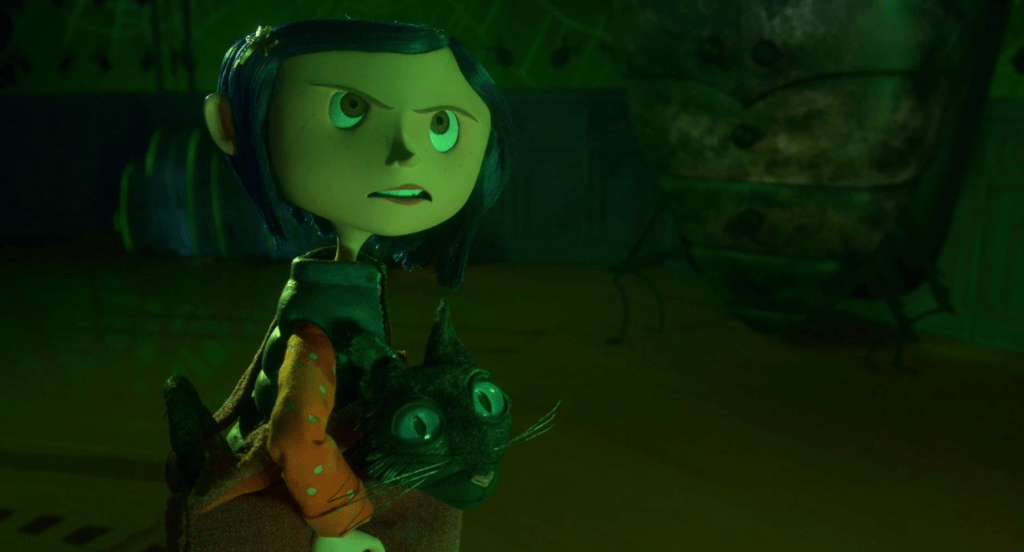
Mysterious, clever, and a bit magical, the unnamed cat from Neil Gaiman’s dark fantasy (and awesomely creepy) children’s book Coraline is a paragon for black cats everywhere. Throughout the book, he serves as an aloof guide for eleven-year-old heroine Coraline—he’s kind of like the Cheshire Cat if the Cheshire Cat were actually helpful.

He appears in the 2002 novella by Gaiman (both in Gaiman’s text and in illustrations by Dave McKean) and in Henry Selick’s 2009 stop-motion film adaption. While the book is wonderfully creepy, no matter your age, the movie is really great too, with its gorgeous animation and perfectly cast voice acting, including Keith David, the enigmatic and dark voice of the cat.

©Focus Features

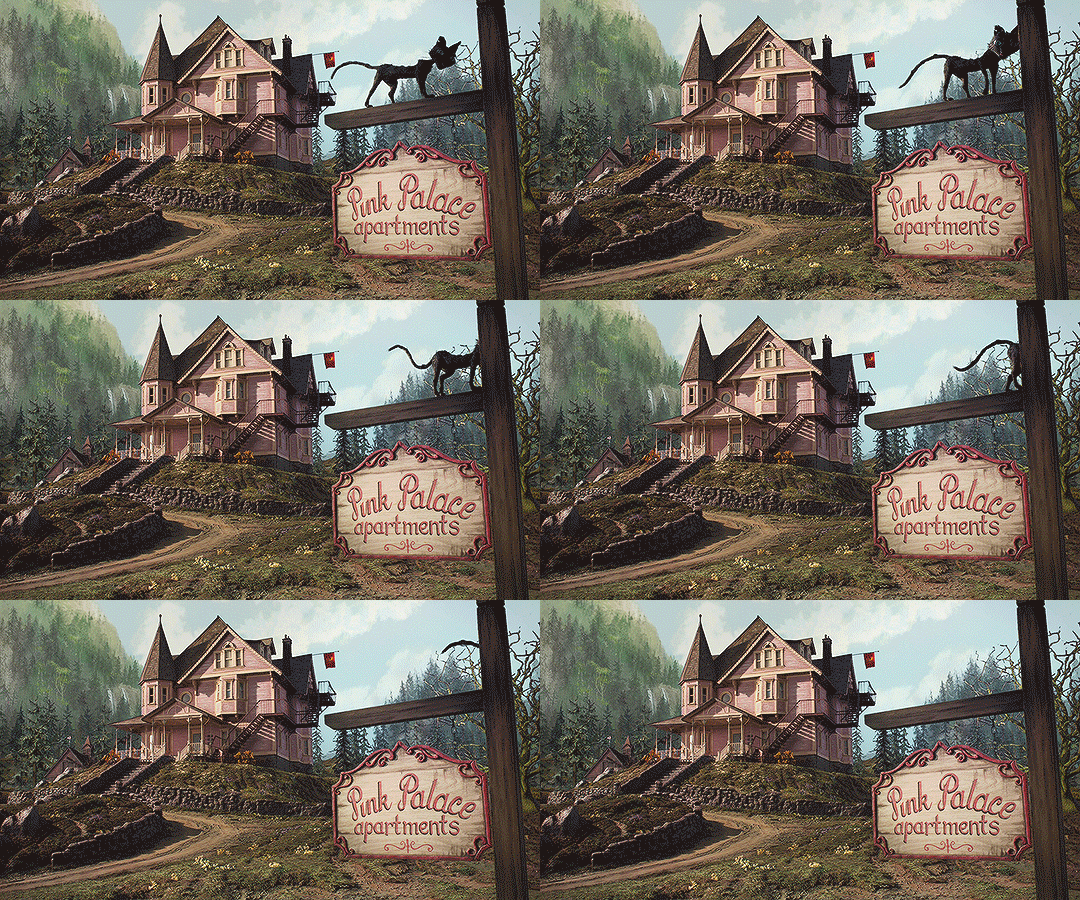
When Coraline Jones and her parents move into a new apartment, she explores the grounds and occasionally sees a black cat around who she describes as haughty and avoidant of her attempts to interact with it. But when she discovers and enters a secret portal to another world through a small door in her parlor, she encounters the black cat again, and this time, he sticks around for a chat.

It seems that whatever space Coraline enters through her parlor door lends some magic to cats, or at least this one. When she spots him on the grounds in the other world, he greets her with a casual “Good afternoon.” Coraline thinks the cat’s voice sounds like the voice at the back of her head, “the voice she thought words in, but a man’s voice, not a girl’s.”

They have a conversation about names, and he insists that cats do not need them (T. S. Eliot has left the chat) while proceeding to disappear and magically reappear behind various things in the garden, demonstrating his comfort and familiarity with this mysterious place.

©Focus Features

Despite his occasional sassiness, he’s pretty reasonable, as far as magical cats go, and he helps Coraline multiple times, giving her information about the world she’s walked into, the evil entity—the other mother, who looks like Coraline’s mother with buttons for eyes—she must defeat, and dropping clues on how, exactly to defeat it.

It’s even thanks to him, in the end, that the two are able to escape the other mother’s clutches and get back to the real world.

Once safely home, Coraline explores the garden with newfound fervor for real life, giving her new friend belly rubs when she runs into him, and even without his being able to talk in this world, they manage to converse.

©Focus Features

Here’s to mysterious, fictional cats, who know all the answers but can’t always be bothered to share them.

“You must be the other cat.”

The cat shook its head. “No,” it said. “I’m not the other anything. I’m me.” It tipped its head to one side; green eyes glinted. “You people are spread all over the place. Cats, on the other hand, keep ourselves together. If you see what I mean.”

“I suppose. But if you’re the same cat I saw at home, how can you talk?”

Cats don’t have shoulders, not like people do. But the cat shrugged, in one smooth movement that started at the tip of its tail and ended in a raised movement of its whiskers. “I can talk.”

“Cats don’t talk at home.”

“No?” said the cat.

“No,” said Coraline.

The cat leapt smoothly from the wall to the grass near Coraline’s feet. It stared up at her.

“Well, you’re the expert on these things,” said the cat dryly. “After all, what would I know? I’m only a cat.”

It began to walk away, head and tail held high and proud.

—Neil Gaiman, Coraline
Quote

Alone

by Edgar Allen Poe

From childhood’s hour I have not been
As others were—I have not seen
As others saw—I could not bring
My passions from a common spring—
From the same source I have not taken
My sorrow—I could not awaken
My heart to joy at the same tone—
And all I lov’d—I lov’d alone—
Then—in my childhood—in the dawn
Of a most stormy life—was drawn
From ev’ry depth of good and ill
The mystery which binds me still—
From the torrent, or the fountain—
From the red cliff of the mountain—
From the sun that ’round me roll’d
In its autumn tint of gold—
From the lightning in the sky
As it pass’d me flying by—
From the thunder, and the storm—
And the cloud that took the form
(When the rest of Heaven was blue)
Of a demon in my view—