
She only ever read a prayer book in big letters and in Latin. She did not understand Latin but she understood the book.
—Victor Hugo, Les Misérables
I’ve posted about the talented and unapologetic Olivia Gatwood before, and here she is again—this time with a poem from her “ode to” series, in which she writes odes to things that are supposed to be shameful (“Ode to My Bitch Face” and “Ode to My Period Underwear” are a few of the other titles).
Here, she portrays Long Island women not as the joke they’re often made out to be but as the fierce, take-no-shit survivors and protectors that they are. And she still manages to keep humor intact.
Excerpt from the poem in the video and her collection New American Best Friend:
Ode to the Women on Long Island
I want to write a poem
for the women on Long Island who
when I show them the knife I carry in my purse
tell me it’s not big enough
Who are waitresses and realtors and massage therapists and social workers and housewives
and tell me they wish they would have been artists
“but life comes fast ya know?
One minute you’re taking typing classes for your new secretary job in the World Trade Center and the next it’s almost over
Life, I mean
but I kicked and screamed my way through it and so will you
I can tell by the way you walk
One more thing—when they call you a bitch, say, ‘Thank you, thank you very much.’”
Once you hear something, you can never return to the time before you heard it.
—Jonathan Safran Foer, Everything Is Illuminated

The genre: Sci-fi
The gist: First contact novel set in an alternate 2007. An American girl serves as an alien species’ sole interpreter for planet Earth.
The background: I wanted to read this book because I’ve been a fan of author Lindsay Ellis’ insightful and funny Youtube video essays for years (I’ve even featured some of her work for PBS on this blog). With a graduate degree in film, and as an observer of media and pop culture, she has a keen understanding of storytelling tropes and techniques, and I was excited when she announced she was putting out her first novel—a series, in fact, with book #2 coming out in fall 2021.
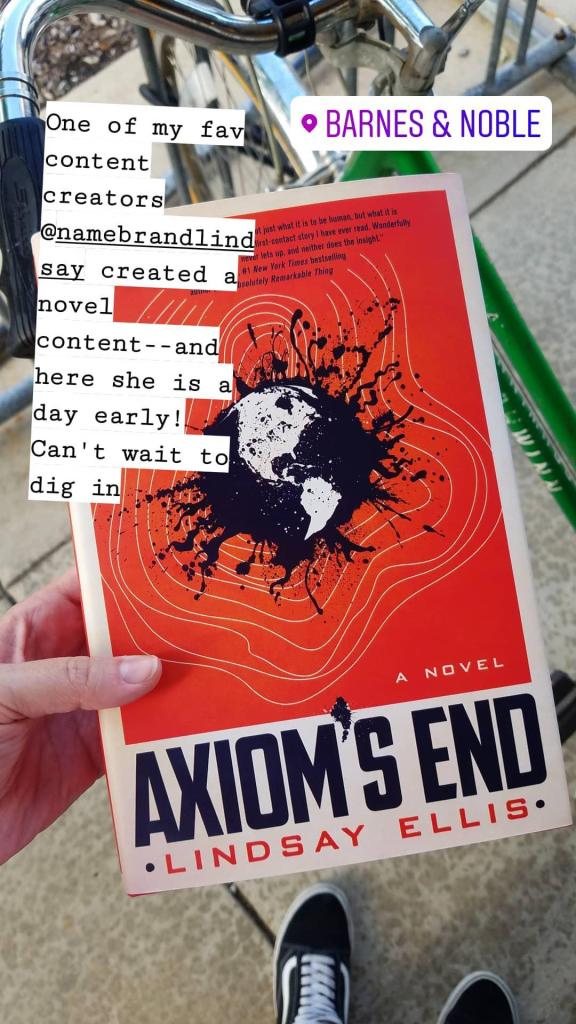
Axiom’s End was officially released July 21, 2020, but with the pandemic going on, I guess bookstores said “fuck it” and I wound up getting my hands on a copy the day before.
The tea: There were things I really liked about this book, and there were things that I wanted it to do better.
The dynamic between the protagonist Cora and the main alien Ampersand was nice, but I don’t know how earned it was; the trust just seemed to be there despite their different backgrounds, and it felt like they got too close too fast. The descriptions of aliens and the worldbuilding around their civilizations were well-thought-out. I really enjoyed the philosophical discussions the characters (human and alien) had about culture, life, and language. The dialogue read as realistic to me (one of Ellis’ MFA focuses was screenwriting) and the pace was good. Especially at about halfway through, I couldn’t put it down.
Also, the cover art is sick.
As for what I wanted more of, I wish the writing had made me feel a stronger connection to the characters or concerned about what happened to them. I didn’t really feel the tension of what was at stake for Cora and her family, only between Cora and Ampersand. There were also some minor inconsistencies that threw me, which I’ll chalk up to editorial oversight.
Finally, it’s mentioned early on in the novel that Cora studied linguistics, and I was a little let down this didn’t come into play in a significant way when she became an alien interpreter; maybe it will in the books to come.
The wrap-up: I went into this knowing that long-form sci-fi without dystopia isn’t totally my thing, and I still found it an enjoyable read, if a little disappointing. The subject matter is interesting, and Ellis’ exploration of the theme of embracing “the other” is a fresh take and kind of heartwarming.
The rating: ⭐⭐.5 / 5
There it was. Not everything could be explained, at least not with the limits of spoken language. But there was something comforting to it. Their mutual inability to understand each other leading to a place of understanding.
—Lindsay Ellis, Axiom’s End


Paperback Coffee & Tea in London
I wasn’t aware that words could hold so much. I didn’t know a sentence could be so full.
—Delia Owens, Where the Crawdads Sing

This scrappy fuzzball from The Hunger Games trilogy by Suzanne Collins belongs to heroine Katniss Everdeen’s sister Prim. He appears in all three novels (and four films) as a comforting companion to Prim and an annoyance to Katniss, with whom he’s not on the friendliest of terms due to her (expositional) attempt to drown him in a bucket—bad Katniss! Eventually, though, she accepts Prim’s attachment to him.
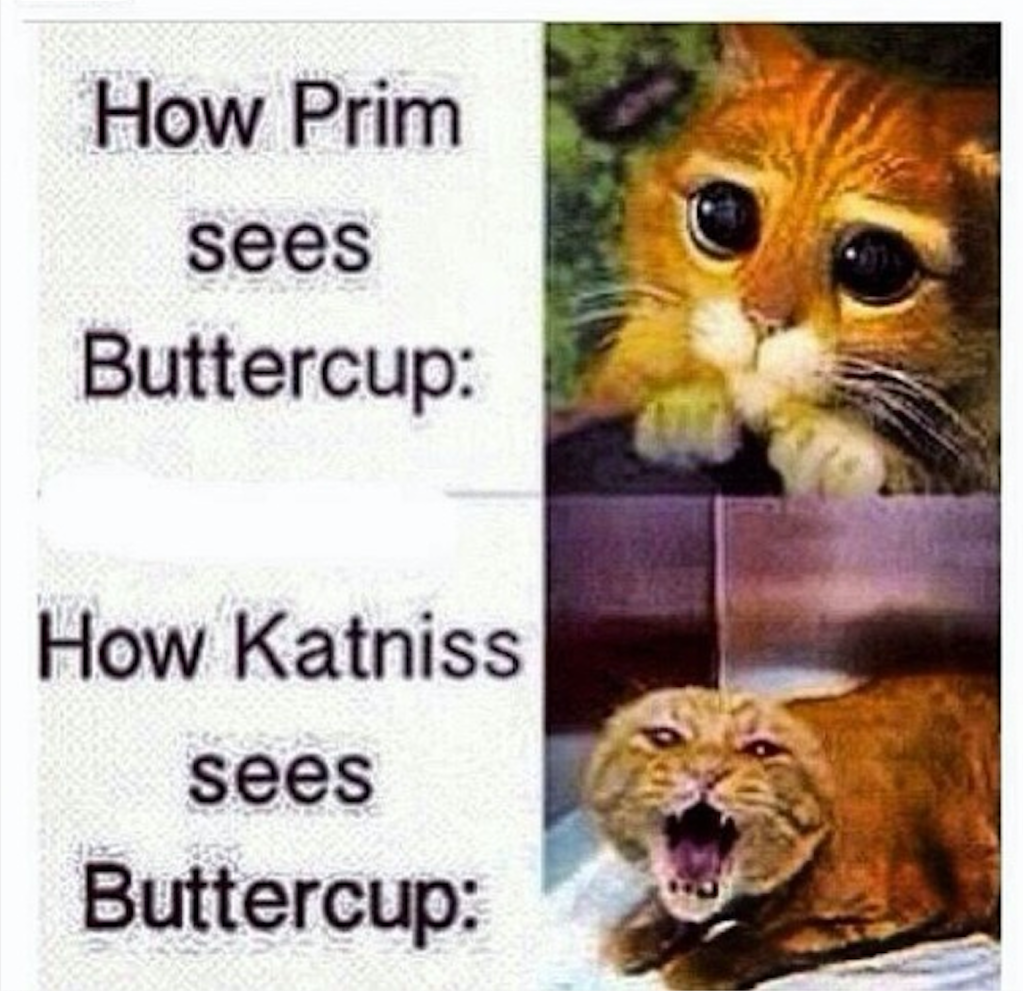
Buttercup is said to be a good mouser and even catches the occasional rat. He’s described in the novels as looking a little worse-for-wear with a mashed-in nose and half of one ear missing—which tracks, considering his rough life in the impoverished District 12. His name comes from Prim insisting that his muddy yellow coat matches the bright buttercup flower.
In fact, the makers of the Hunger Games films tried to pull a fast one by casting a black-and-white cat as Buttercup in the first movie. Collins and fans (rightfully) demanded he be changed to a yellow-haired cat for the rest of the films to stay true to the novels and his namesake.

When the Everdeen family moves into a new, much larger house in Catching Fire, Buttercup and Katniss bond over their shared dislike of their new home. Katniss even starts sharing scraps from her hunting kills with him and deigns to give him the occasional behind-the-ear rub.
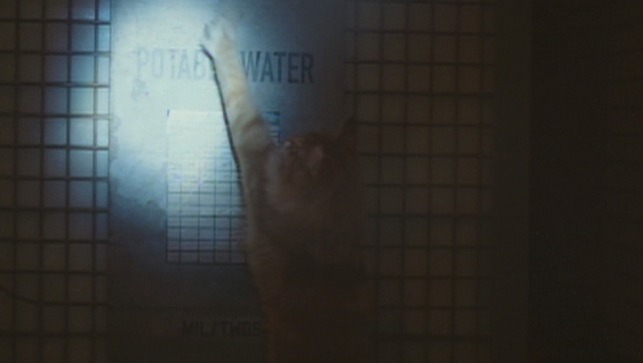
At one point in Mockingjay when the resistance is on lockdown in a bunker during a bombing from the Capitol, Buttercup helps ease the tension by entertaining the troops, so to speak, chasing a flashlight beam and giving Katniss an epiphany about how her enemy is taunting her. And making everyone LOL. (Even in wartime, people can still laugh at cat antics. Call it a testament to the human spirit.)
We don’t get to see a ton of Buttercup, since he lives in District 12 (and eventually 13) and our POV character Katniss is usually off fighting for her life somewhere else, but he makes his few appearances count.
Case in point: this passage from Mockingjay, which I’ll close with. Now that I’ve typed it out, I need to go find whoever’s chopping onions around here…
*SPOILER*
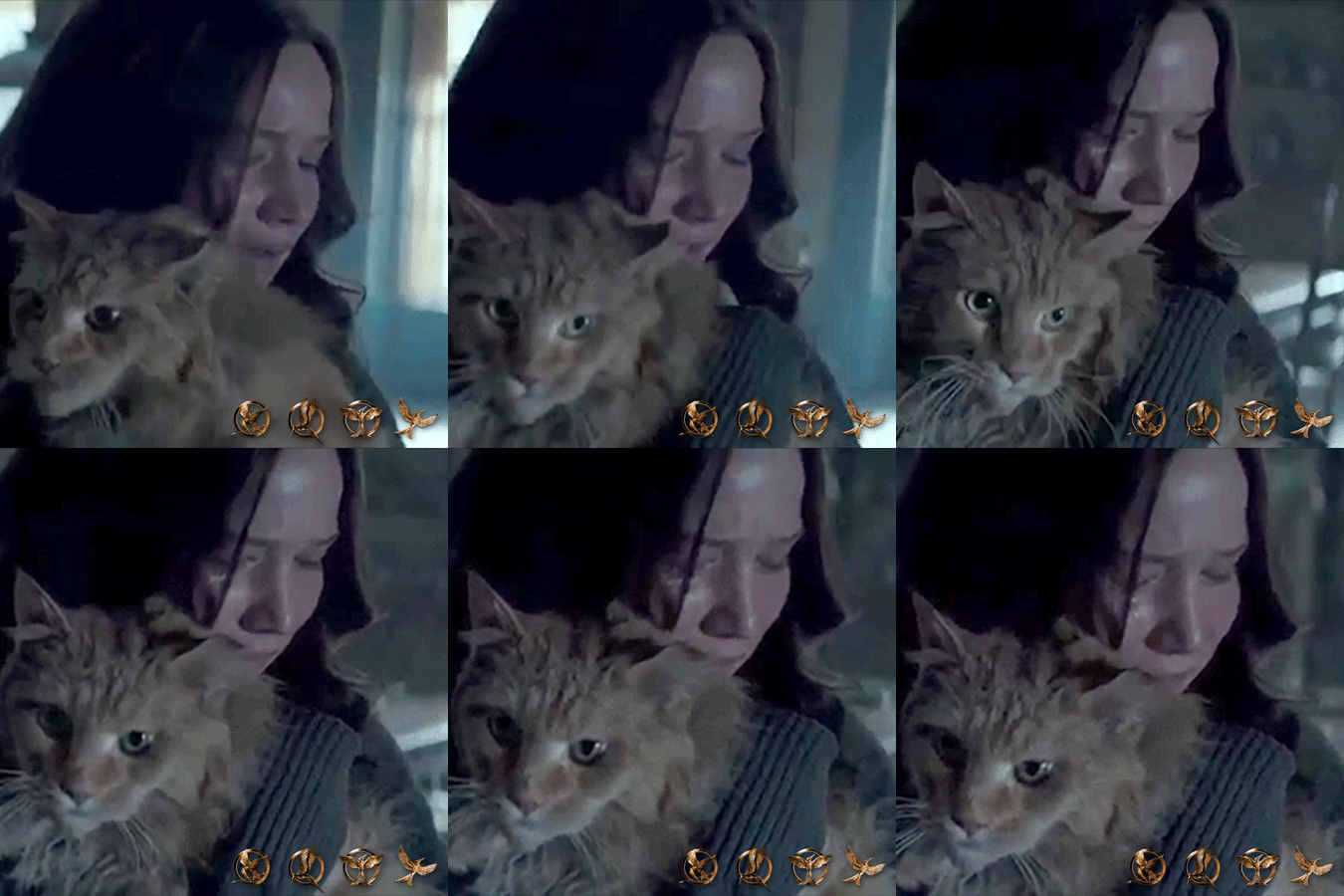
My head snaps around at the hiss, but it takes awhile to believe he’s real. How could he have gotten here? I take in the claw marks from some wild animal, the back paw he holds slightly above the ground, the prominent bones in his face. He’s come on foot, then, all the way from 13. Maybe they kicked him out, or maybe he couldn’t stand it there without her, so he came looking.
“It was a waste of a trip. She’s not here,” I tell him. Buttercup hisses again. “She’s not here. You can hiss all you want. You won’t find Prim.” At her name, he perks up. Raises his flattened ears. Begins to meow hopefully. “Get out!” He dodges the pillow I throw at him. “Go away! There’s nothing left for you here!” I start to shake, furious with him. “She’s never ever coming back here again!” Out of nowhere, the tears begin to pour down my cheeks. I clutch my middle to dull the pain. “She’s dead, you stupid cat. She’s dead.” A new sound, part crying, part singing, comes out of my body, giving new voice to my despair. Buttercup begins to wail as well. No matter what I do, he won’t go. He circles me, just out of reach, as wave after wave of sobs racks my body, until eventually I fall unconscious.
But he must understand. Because hours later, when I come to in my bed, he’s there in the moonlight. Crouched beside me, yellow eyes alert, guarding me from the night.
—Suzanne Collins, Mockingjay
 That Book Broad