
The Most Interesting Dally in the World
The Most Interesting Dally in the World
In a country that doesn’t discriminate between fame and infamy, the latter presents itself as plainly more achievable.
—Lionel Shriver, We Need to Talk About Kevin
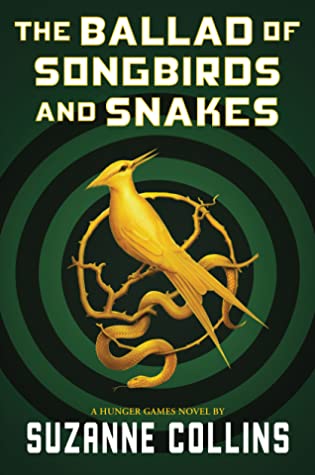
The genre: Dystopian, YA
The gist: Prequel to the Hunger Games series focusing on President Snow’s formative years and the nascent days of the Hunger Games competition.
The background: The Hunger Games trilogy are some of my favorite books to read again and again—I love Suzanne Collins’s writing, worldbuilding, and characters. So I don’t know why I let this prequel sit on my shelf for months before finally diving in. I think it had to do with the mixed reviews I’d heard, and I was postponing being disappointed. I shouldn’t have been worried; reviews are nothing compared to your actual reading experience, and this was a great one.
The tea: I’m just going to come out and say I loved this book.
As a big Hunger Games fan, I thought this was a satisfying tale that did three things very well: It expanded on the history of Panem and the Games, it gave background and nuance to the eventually villainous Coriolanus Snow, and it made thought-provoking connections to the original trilogy.
The only complaint I could have about this book is the lack of action until about halfway through, and maybe some uneven pacing, but I don’t really care that it’s not action-packed.
It reads as more of a character study on Snow, and Collins spends a lot of time showing how he thinks, how he calibrates and adapts, how he works to keep up appearances, how he meticulously measures the consequences of his words and actions, the risk and the reward. We get to see that he’s naturally calculating and ambitious, but he was raised in the Capitol among the calculating, ambitious, and even ruthless. So, was he always destined to become an evil tyrant, or did the Capitol create a monster? It’s a classic nature versus nurture question, and it’s kind of fun to think about.
Beyond painting a clear picture of a young Snow, the book gives more info on the war that started the Hunger Games tradition and hints at how the Games grew from a bleak event that nobody even in the Capitol wanted to watch (the novel is set during the 10th Annual Hunger Games) to the sparkly, reality show phenomenon it became by Katniss’s time. Plus, it elaborates on a few other things from the trilogy that I won’t spoil here.
While I would read anything Collins wrote set in the HG world, she couldn’t have picked a better character to explore. It’s a twist on the typical villain origin story, giving the bad guy a dose of humanity, but ultimately showing that some villains might be just that.
The wrap-up: I’d suggest those who haven’t read The Hunger Games start with the trilogy first, but The Ballad of Songbirds and Snakes is a must-read for HG fans. I know some have been disappointed, but I think if you go into it ready to soak up knowledge of the dystopian world rather than be hit with a cliffhanger every other page, you’ll have a good time reading.
In any case, it got me excited enough to read through the trilogy yet again, this time with a new lens—and a prequel that enriches its source material is a success in my book.
The rating: ⭐⭐⭐⭐/5
“People aren’t so bad, really,” she said. “It’s what the world does to them.”
—Suzanne Collins, The Ballad of Songbirds and Snakes
Nothing is so necessary for a young man as the society of clever women.
–Leo Tolstoy, War and Peace
He yearned to step out of his life the way one steps out of a house into the street.
—Milan Kundera, The Unbearable Lightness of Being
I desired to see new things. I desired to experience volumes.
—Jonathan Safran Foer, Everything Is Illuminated
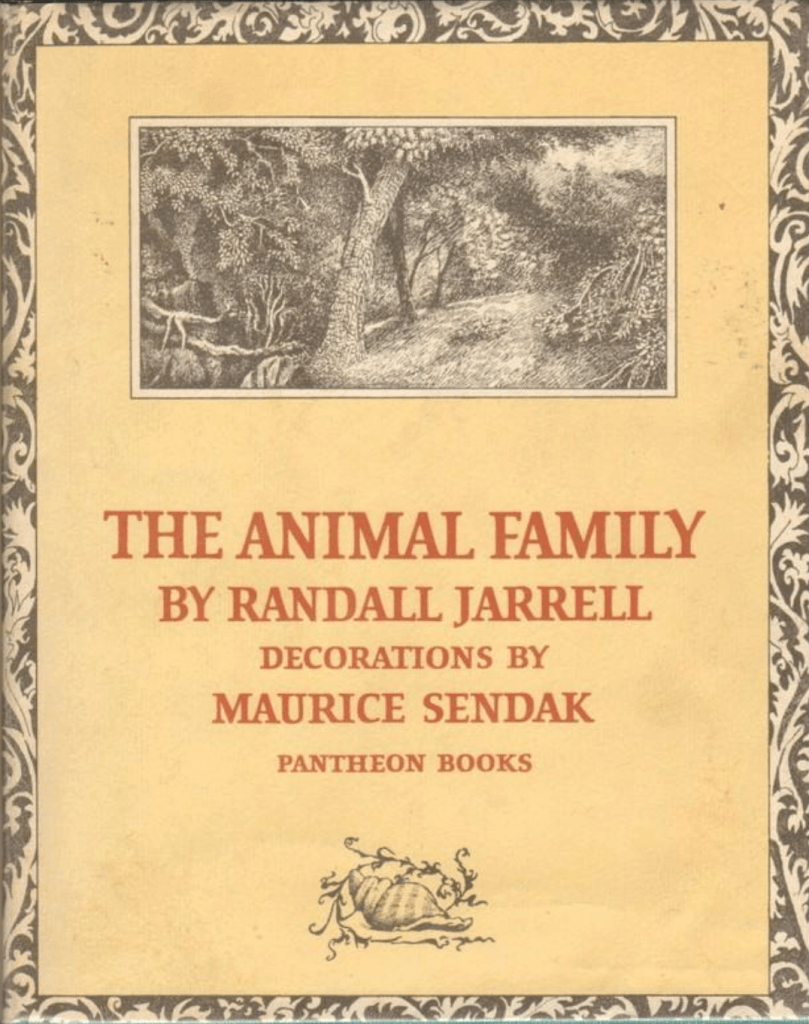
The genre: Children’s literature
The gist: A fairy tale story about an unconventional, self-made family.
The background: In elementary school, my library teacher (yes, we had a library class. I can only guess every class was about the Dewey Decimal System?) gave my class a list of all the Newbery Honor books. She encouraged us to read as many as we could by the end of the school year, so sure enough it became something of a competition. The Newbery books were flying off the shelves, and one of the first ones I could get my hands on was a peculiarly small, square book called The Animal Family. From the first page, I loved it. The world was so ethereal and utopic that I never wanted to leave.
And I’ve read it over and over again since. As cheesy as it sounds, it still holds the same kind of magic for me as when I first read it as a kid (though I think books from our childhoods can tend to do that). I’m transported every time. It’s not only one of my favorite childhood books, but one of my favorite books. So here’s its much-deserved review.
The tea: 1965’s The Animal Family is a little-known gem.
Authored by poet Randall Jarrell with illustrations by iconic children’s author and illustrator Maurice Sendak, this book packs a lot of punch in a small package.
Let’s talk about Mr. Sendak for a second first: Though Sendak is known for his distinctive character designs like in Where the Wild Things Are, among others, the drawings in The Animal Family are all landscapes or embellishments. A cliff, a forest, an ocean, a cave, some decorative vines. The pretty illustrations show just how wide his range was as an artist, and some of his distinct style shines through in the forest drawings that remind me of the forest-y scenes in Where the Wild Things Are.
The choice not to illustrate any of the characters adds to the magic of the book, so the reader is free to imagine the them however they wish.
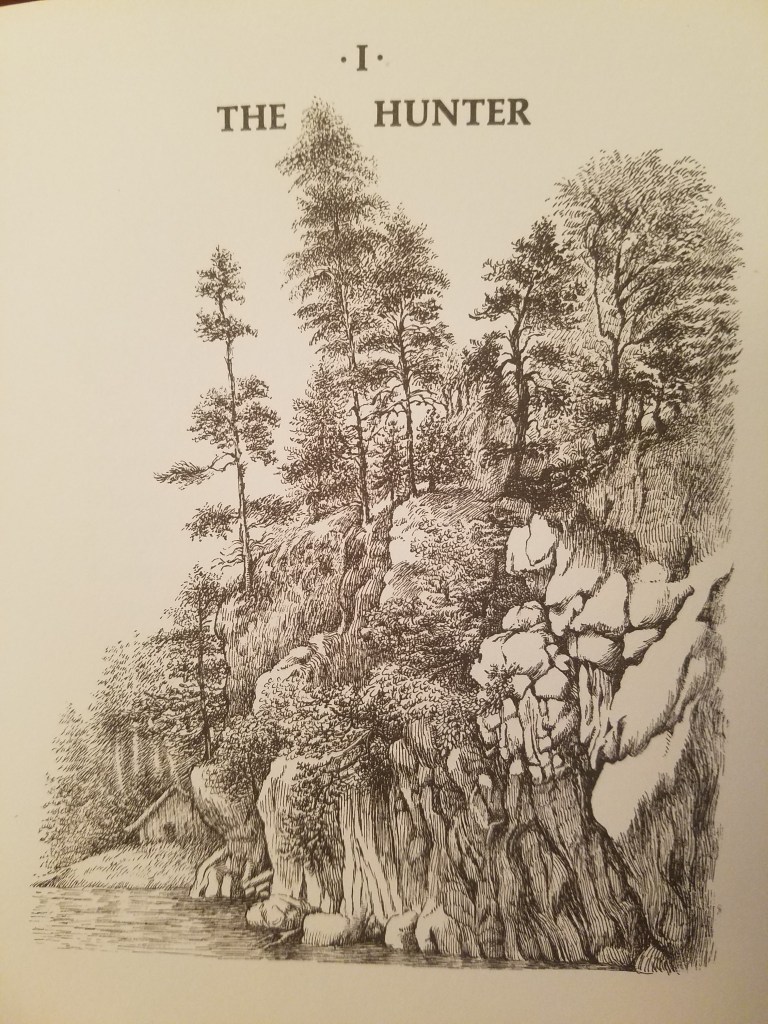
Now, the story. The events are simple, but even in prose, Jarrell’s poetic insight lifts the story off the page, and that’s what makes this book truly enchanting.
A hunter lives alone “where the forest runs down to the ocean” and begins hearing a lone mermaid singing from the water. Over time, he befriends her, she decides to live on land, and they soon add members to their makeshift little family one by one, including a bear, a lynx, and a boy. The five-creature family lives happily ever after.
What it lacks in plot, it makes up for in genuine, even wise sweetness. Every time a new member is added to the family, it’s mentioned how they couldn’t believe they used to live without them. Once the hunter has the mermaid in his life, he can’t imagine how he used to live alone. Once the mermaid and hunter have the messy, sweet bear cub in their life, the mermaid remarks, “To think we used to live without a bear!” And when the boy comes into their life, his being found on the beach after a shipwreck fades to less of a truth than the one they tell him: “We’ve had you always.”
It’s a warm hug of a book, without being cloying. It’s a celebration of self-chosen families, of adoptive families, of friends, of the ones you pick to have by your side not out of obligation but because you want and like them there.
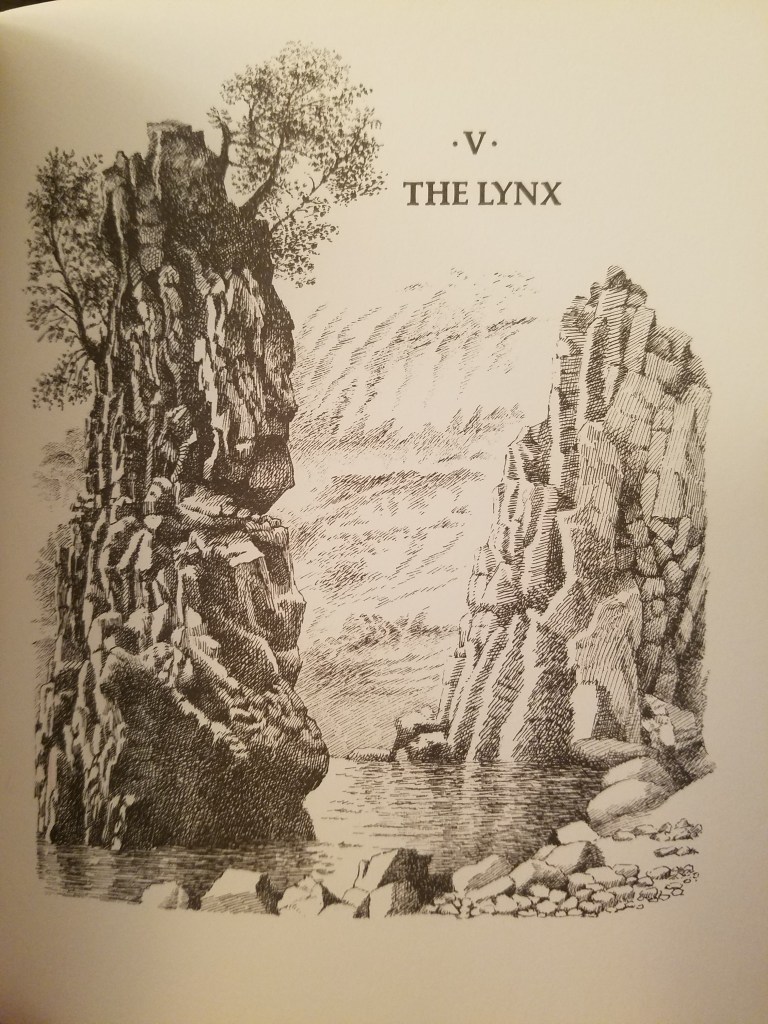
Like in fairy tales where you don’t question an enspelled maiden sleeping a hundred years, you don’t question the practicality or realism of a lynx, bear, and human living together, nor the existence of mermaids. But unlike many fairy tales, Jarrell gives the story just enough detail to make the characters real and lovable: in the conversations the hunter and mermaid have learning each other’s language (“Whatever you say has that—that walnut sound,” she says to him); in the specific, thoughtful ways the hunter helps the mermaid adapt, like building a rocking chair for her to remind her of the motion of the sea.
When I first read this book as a kid, it was, and is, unlike anything else I’ve ever read. It’s novel in every sense of the word—the perfect of example of the art form’s namesake.
The wrap-up: Read this book. Read it alone. Read it to your kids. Give it as a gift. It’s, sadly, out of print, but easy enough to find used for a decent price. And there’s always the library. I’m not promising it’ll blow you away like it did me, but I’m pretty sure it’ll warm your damn heart.
The rating: ⭐⭐⭐⭐⭐/5
The hunter and the mermaid were so different from each other that it seemed to them, finally, that they were exactly alike; and they lived together and were happy.
—Randall Jarrell, The Animal Family
I was okay just a moment ago. I will learn how to be okay again.
—Nina LaCour, We Are Okay
What am I? A bit of dust embodied by an organism. What am I supposed to be doing on this earth? I have a choice. To suffer or to enjoy myself. Where will suffering get me? Nowhere. But I will have suffered. Where will enjoying myself get me? Nowhere. But I will have enjoyed myself.
—Victor Hugo, Les Misérables
“No wonder kids grow up crazy. A cat’s cradle is nothing but a bunch of Xs between somebody’s hands, and little kids look and look and look at all those Xs . . .”
“And?”
“No damn cat, and no damn cradle.”
—Kurt Vonnegut, Cat’s Cradle
 That Book Broad